
Openwork cages use grids, bars or patterned frames; solid-shell cages use broader walls with defined openings. Both can have recesses and connections that need attention. Before choosing, ask what you can inspect and clean on the actual model rather than treating openness as a hygiene rating.
What openwork and shell describe
The Printed Negative shows what “openwork” means here: the front and side views reveal gaps between members of a grid. On the ABS Small Shell, a broad shell covers much of the front, with a smaller opening. The appearance of the shell does not establish a manufacturing process, and a small opening does not make an otherwise continuous shell a grid.
Compare the visible structure
| Question | Openwork example | Solid-shell example |
|---|---|---|
| Can you see every contact surface? | Crossings and joints may still obscure surfaces. | The inner wall may need a separate view. |
| Where could residue remain? | Junctions, textures and closures. | Recesses, opening edges and closures. |
| How is it cleaned? | Use the approved method; openings do not eliminate the need for removal. | Confirm access to the interior without forcing fixed parts. |
| How is dryness checked? | Inspect connections as well as exposed bars. | Inspect inner surfaces and recesses as well as the outside. |
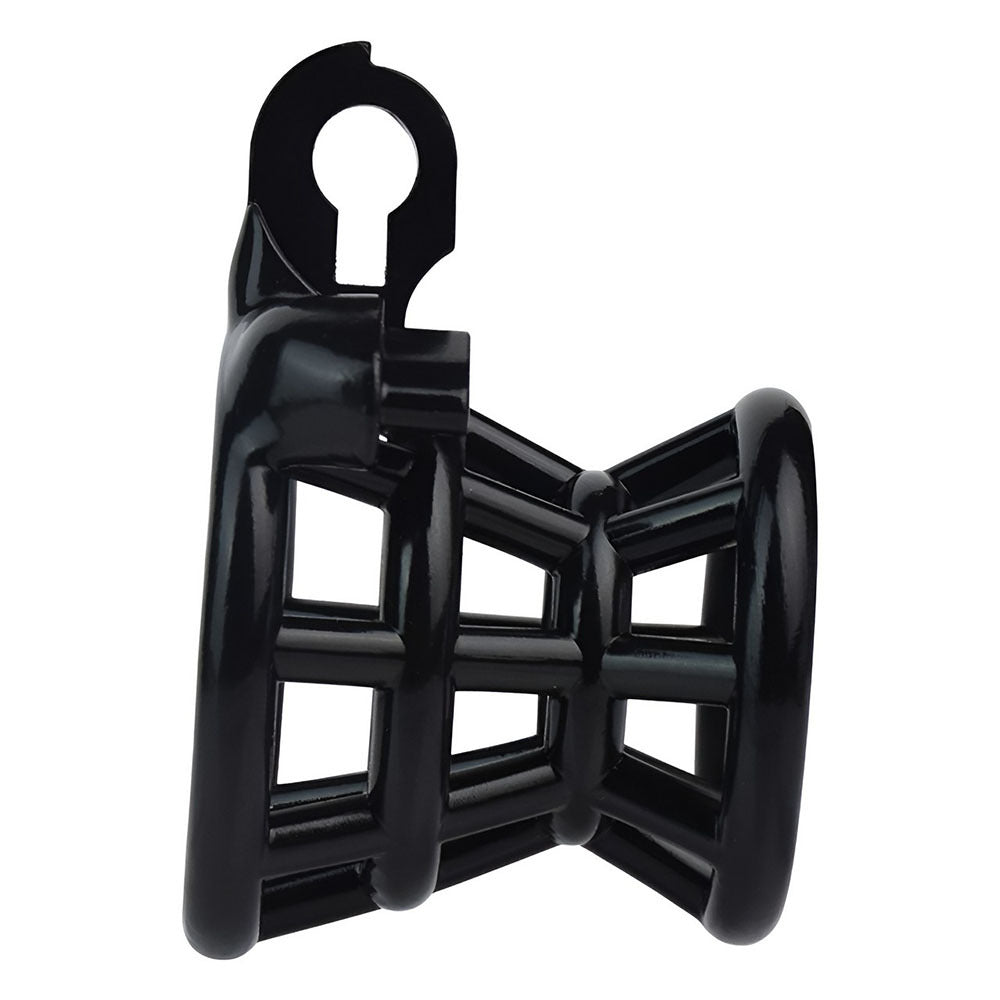
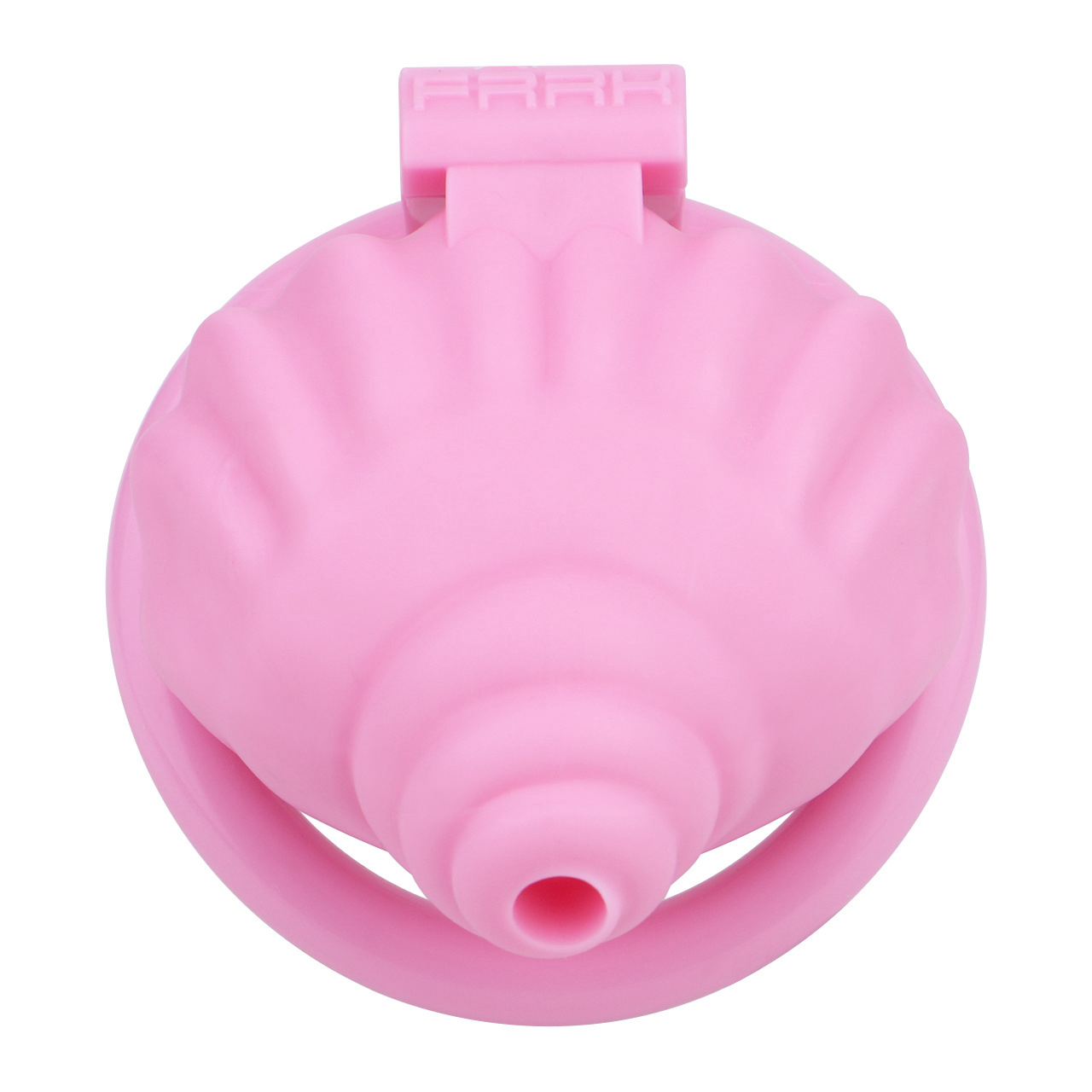

The Heart-Shaped Flat & Inverted gives a third reference. Its heart-shaped face has a central opening, while the short and long side views show different rear outlines. A front photograph can reveal that opening; it cannot show that every part behind it is reachable. Treat “open” as a description of a particular face or region, not a verdict on the complete assembly.
Try reading the three pictures with a different question for each. For the open grid, which edges are visible through the side openings, and which are hidden behind another member? For the shell, can you distinguish the small front opening from the outside contour of the face? For the heart-shaped front, does switching to the long version change a surface that a head-on photo hides? These are questions a gallery can help answer. “Which breathes best?” is not: the product images contain no comparable airflow measurements or observations under the same conditions.
Dimensions still matter
The white shell’s own size drawing shows 60 mm across the outside front and 6 mm at the opening. Those two arrows make a useful point: a wide front is quite compatible with a narrow opening. The printed negative’s D arrow, by contrast, runs along the cage body from the side. Neither number supplies an interior capacity to rank the two bodies.
The ABS diagram is particularly helpful when comparing pictures taken at different scales. It gives one side span for the shell and a longer one across the pictured assembly with the ring. If you crop the ring out, the photograph still shows the same shell, but a measurement across the entire assembly would no longer describe what is in the cropped frame. On the grid model, D runs across the grid structure itself. Record whether the ring appears within each arrow before treating the numbers as a difference in overall projection.
Care information to check
A grid creates multiple edges and contact regions; a shell has its own perimeter and openings. How those features interact with an individual is not established by the category. Likewise, a continuous shell and a pattern can affect clothing differently without either being guaranteed discreet.
If the concern is cleaning access, identify which face can actually be seen, which junctions disappear behind the ring, and which parts the instructions allow you to separate. Do not count the open cells as a measure of airflow or assume a smooth continuous face means the recess behind it will be easy to reach.
A maintenance question is often more precise than a category preference. If you want to see a particular junction before storing a device, look for a view of that junction and an indication of which parts may be separated for care. The wide face of a shell can leave a connection visible at the top, while a grid can place intersecting members immediately in front of a surface you need to inspect. Neither the number of openings nor the broad material description settles that question. Ask for the model’s care directions for the surface you cannot identify.
Three product examples
- Geometry: the defined internal and external dimensions.
- Access: which surfaces can be reached and which parts detach as designed.
- Care: which methods are approved for the actual materials and finish.
The flat-design comparison applies the structure question specifically to flat models. Open versus enclosed cleaning gives the care workflow; the specification guide covers unclear fields. Do not purchase a design on the assumption that a quick rinse will substitute for adequate cleaning.
Compare the grid and shell as complete configurations: the printed model has four rings listed at 42, 45, 48 and 52 mm, the ABS shell four at 40, 43, 46 and 50 mm plus a separate nylon strap choice. The ring packages are a second decision independent of whether you prefer looking at a grid or a shell.