
No — inverted and flat chastity cages are not two names for the same thing. Both designs aim at a lower profile than a traditional tube cage, and some products borrow from both, but they get there differently. A flat cage compresses the penis against a plate or shallow front. An inverted cage directs it inward, into a recessed pocket that faces the body. Knowing which one you’re looking at makes the measurements and options on each product page much easier to read.
Inverted vs. Flat Chastity Cage at a Glance
| Inverted | Flat | |
|---|---|---|
| Shape | Recessed pocket or shell facing the body | Plate or shallow front panel |
| External profile | Compact; depth sits against the ring | Minimal forward projection |
| Internal structure | Penis directed inward | Penis pressed flat against the front |
| Typical materials | Stainless steel or resin, depending on the model | Same range — material follows the product |
| Ring configuration | Often several selectable ring sizes; some include multiple rings | Also common with multiple ring sizes; varies by product |
| Measurement focus | Internal depth plus ring diameter | Front panel dimensions plus ring diameter |
| Best reason to consider it | You want the penis held inward rather than compressed forward | You want the front as flat as possible |
Those are patterns, not guarantees — check the individual product specifications before treating any row as fact for a specific model.
What an Inverted Design Looks Like
The defining feature is direction: the cage body forms a pocket that faces back toward the wearer, so there’s no forward tube at all, or only a very short one. The base ring anchors everything, and the visible front is usually just a compact shell with an opening for urination. If a listing’s photos show a shell hugging the ring rather than a tube extending away from it, that’s the inverted idea.
Resin Inverted Chastity Cage – Easy-Flow Pee Hole
One of the clearest inverted examples in the shop. The pocket-style body sits right against the ring, and the front opening is specifically shaped for a more direct urination path — a small design detail that matters more for daily wear than most people expect when comparing product photos. The page lists the four base-ring sizes, the optional nylon strap, and exactly what ships in the package, so it’s also a good model for practicing spec-reading.
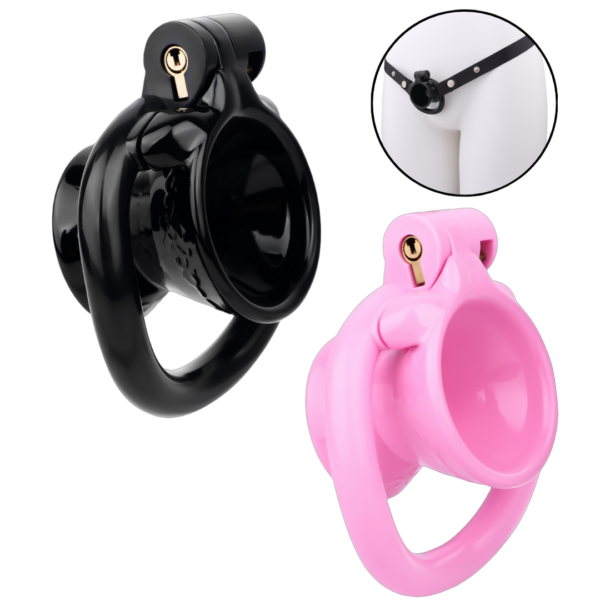
Check ring sizes and options →
What a Flat Design Looks Like
A flat cage replaces depth with surface. The penis rests against a plate or low shell, and the design’s job is to keep the front as close to the body as possible. Flat models often look almost like a single disc from the front, with the opening positioned wherever the plate needs it. The fit question shifts too: with little internal depth to work with, the ring size and the plate’s listed dimensions carry most of the decision.
Pink Resin Flat Chastity Cage
A clean flat example to compare against the inverted model above. The front is a simple resin shell with no forward extension, and the product page offers five ring sizes (42, 46, 48, 53, and 60mm) — a wider-than-average range that shows how much flat designs lean on ring fit. Note the package contents too: the cage, a key lock, and one ring in your selected size. Multiple sizes offered doesn’t mean multiple rings shipped.
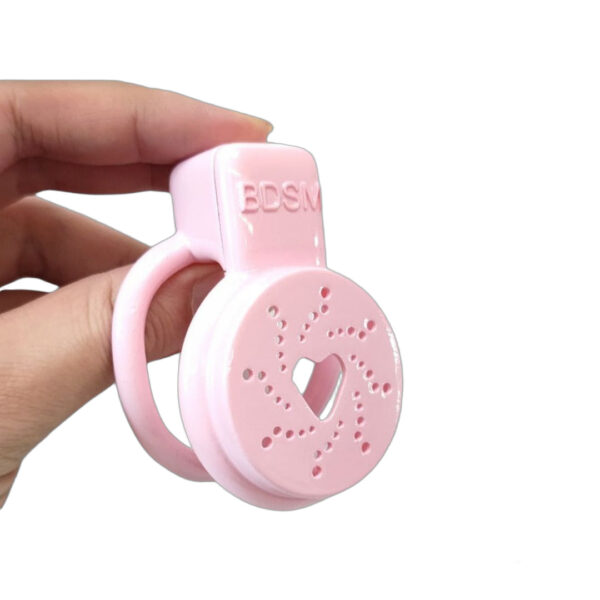
See the Pink Resin Flat Chastity Cage →
Where the Two Designs Overlap
Some products sit between the categories on purpose. A cage can have a flat front panel with an inverted internal pocket, or a detachable section that changes how it sits. Listings sometimes appear in both the flat and inverted categories for this reason. That’s not sloppy labeling — it’s a hint that the product combines ideas, and those hybrids are worth a closer look if you keep going back and forth between the two designs.
Detachable Flat Inverted Chastity Cage with Strap
This model is listed under both categories, and the design explains why: a flat front combined with an inverted internal arrangement, plus a detachable connection between the parts. It’s a practical crossover example if you’re torn between the two profiles — one product page gives you both ideas to compare. The four ring sizes and the optional elastic strap are listed separately from the base configuration, which keeps the comparison honest.
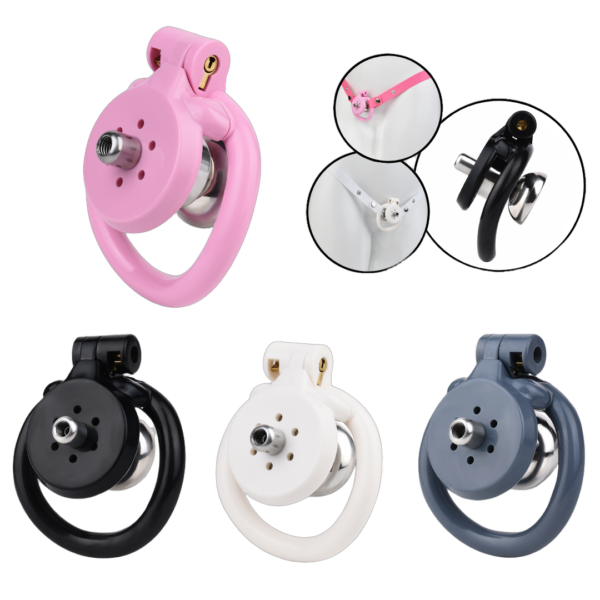
View the Detachable Flat Inverted Cage →
Profile and Discretion
Both designs exist because people want less to hide. The honest answer about which is “more discreet” is: whichever one’s dimensions match your body and clothing. A flat plate can sit lower under tight clothing; an inverted pocket can distribute bulk differently against the body. What the product is made of plays a role too — a rigid steel shell doesn’t compress the way some resin constructions might, and neither should be expected to. Compare the listed profile measurements rather than the category name.
Fit and Measurement Differences
For an inverted cage, the numbers that matter most are the internal depth of the pocket and the base-ring inner diameter. For a flat cage, the plate dimensions and ring diameter do the work. In both cases the ring is the anchor — get that wrong and nothing else about the design matters. Measure before shopping, then match yourself to the sizes each product actually offers. The Size Guide walks through the measurements step by step.
Metal, Resin and Other Materials
Neither design owns a material. You’ll find flat and inverted models in stainless steel and in resin, sometimes in the same product range with different configuration options. Material changes weight, rigidity, finish, and cleaning routine — and it interacts with the design, since a resin shell and a steel plate of the same listed dimensions won’t feel the same to wear. That comparison has its own guide: Metal vs. Resin Inverted Chastity Cages.
Which Design Should You Compare First?
A short way to decide:
- If your priority is the penis being held inward rather than pressed flat, start with inverted models.
- If your priority is the lowest possible front, start with flat models.
- If you keep flip-flopping, look at hybrids and crossover listings before ruling anything out.
Either way, compare specific products, not categories: dimensions, ring sizes, material, lock type, and package contents. If you’re new to the inverted side specifically, the beginner’s guide to inverted cages is the place to start, and the choosing checklist turns a shortlist into a decision.
FAQ
Can a cage be both flat and inverted?
Yes. Some products combine a flat front with an inward pocket or offer detachable sections, and such listings often appear in both categories. The product’s own construction details settle the question.
Which design has a smaller profile?
Both are built for low profile; which sits smaller on you depends on the model’s dimensions, the material, and your body. Compare listed measurements rather than trusting either label.
Do flat and inverted cages use the same rings?
They use the same concept — a base ring behind the scrotum — but sizes and shapes vary by product. Never assume a ring from one cage fits another; that’s a compatibility question with its own guide.
Ready to compare real listings? Browse the Inverted Chastity Cage and Flat Chastity Cage collections, or revisit the Size Guide before you pick a ring size.