
Choosing an inverted chastity cage by looks alone is the fastest way to end up with the wrong one. Two cages that photograph almost identically can differ in every dimension that matters. What actually works is running every candidate through the same short list of checks — design, dimensions, ring, material, lock, package, and accessories — so nothing gets assumed that isn’t written on the product page.
Here are the seven checks, with real examples from the shop for each decision point.
1. Start With the Design
“Inverted” covers more ground than it sounds like it would. Some models are recessed pockets, some are flat-inverted hybrids, some add a steel ball, plug, or other front detail. None of that is decoration — each structure changes how the cage sits and what you’ll measure next. Skim a few different styles before locking onto one, because the design you didn’t know existed is often the one that fits the wear you have in mind.
Some product pages make this easy by putting several styles in one place:
Pink Small Sissy Chastity Cage With 4 Base Rings – Micro / Negative / Stub
This listing is a design comparison on a single page: three cage styles — Innie/Negative, Micro, and Stub — selectable alongside four included base rings and three colors. Instead of guessing what “negative” looks like next to “micro,” you can check both profiles against the same ring set and pick the shape. If you’re at step one and haven’t settled on a structure, this is where to see the options side by side.
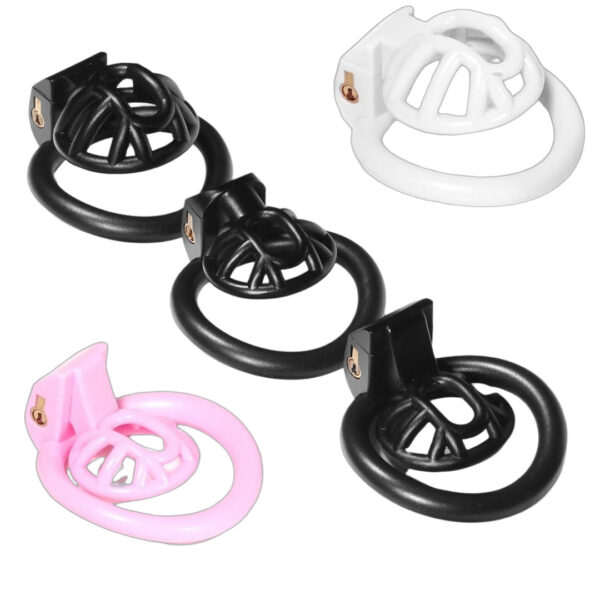
Compare the three cage styles →
2. Check the Cage or Body Dimensions
Once the style is chosen, the numbers decide. Read the cage’s listed length, width, and internal depth exactly as the product defines them — listings measure from different points, and “total length” on one page can be “cage depth” on another. The same caution applies to width: some sellers list the widest external point, others the internal space, and for an inverted cage the internal depth is usually the number that decides comfort.
A practical way to compare: write each candidate’s numbers in the same order — depth, width, ring diameter — and note where the listing defines the measurement from. Pair the list against your own measurements from the Size Guide, and treat any dimension a product doesn’t list as unknown, not average. If two models differ by a few millimeters on paper, remember that some products note a tolerance (±2mm appears on several listings); small differences are real, but they’re not always meaningful.
3. Choose the Correct Base Ring
The ring is the anchor, and it’s where most fit problems start. Two things to check separately: the sizes offered, and how many rings actually ship. On many listings, four ring sizes are available but only the one you select is included — “available in 42, 45, 48, and 52mm” is a menu, not a package list.
Flat Inverted Chastity Cage with 4 Base Rings and Adjustable Strap
This model spells the distinction out: four base-ring sizes to choose from (42, 45, 48, and 52mm), and a package that includes one lock cage, one base ring in the selected size, and two keys. It also carries an adjustable elastic strap (85–130cm) for a belt-style setup. Study this page’s structure and you’ll never confuse “selectable sizes” with “included rings” again.
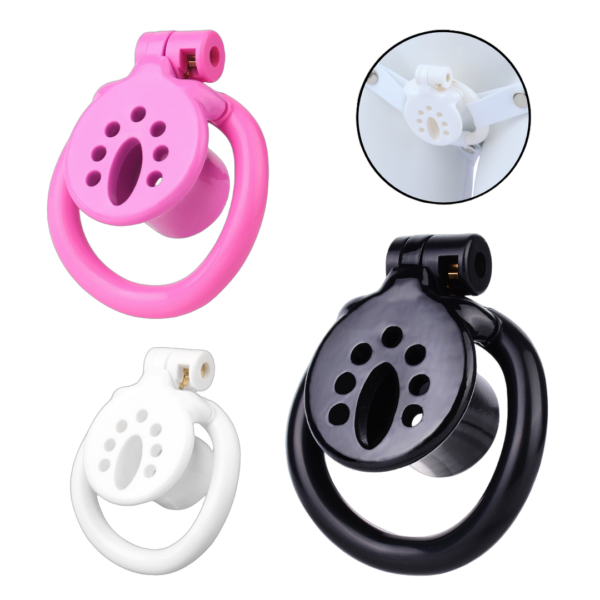
See sizes and package details →
4. Compare Materials
Material changes weight, rigidity, finish, and cleaning routine. Steel brings heft and a non-porous surface; resin keeps things light and opens up colors; listings should name the specific material, and only the named material counts. The full comparison — including cleaning and how geometry, not material, determines profile — is in Metal vs. Resin Inverted Chastity Cages. One construction-focused example:
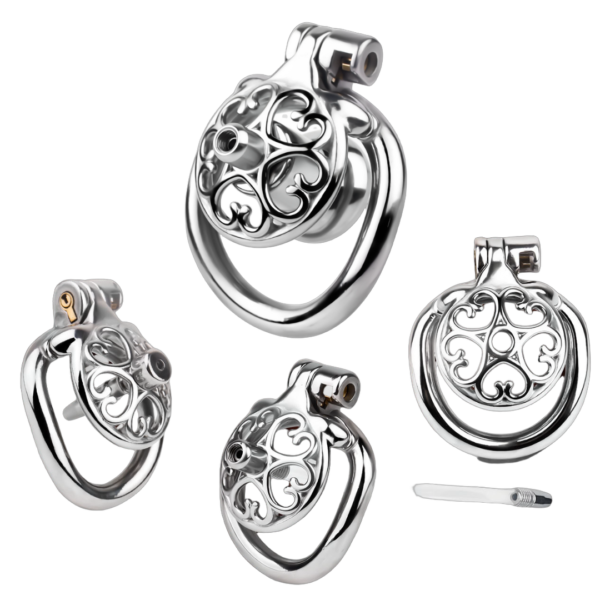
Flat & Inverted Hollow Heart Chastity Cage – Detachable Inverted Plug and Catheter
A 304 stainless-steel build where the material and the construction both matter: the heart-shaped cutout front is flat and inverted at once, and the inverted plug detaches, with silicone and metal catheter options when you want a different setup. Those inserts involve extra care and their own research — but as a materials example it shows steel doing complex geometry, not just simple shells, which is worth knowing when you weigh it against printed resin designs.
5. Check the Locking System
Most inverted cages use a small integrated lock with two keys; some add AirLocks or use a different closure entirely. Confirm three things on the listing: the lock type, that keys are included, and how the lock interacts with any removable parts you chose. If you’ll travel or need quick removal, the locking mechanism deserves as much attention as the dimensions — and losing the key with no spare is its own kind of problem, so note where your second key ends up before the box goes in the bin.
6. Review What Is Included
Package contents vary product to product, even between listings that look alike. Count the components named in the package section — cage, ring or rings, lock, keys, straps, spares — and notice what’s listed as optional rather than included. If the photos show three rings and the package section names one, the package section is right. We’ve broken down how to read these lists (and how variants change them) in What’s Included in an Inverted Chastity Cage Set?
7. Check Accessories and Compatibility
Straps, belts, replacement rings, and locks are all sold separately — and compatibility is never automatic. A strap that works with one cage’s connection points can be useless with another’s. Before adding any accessory, check its attachment method and dimensions against your cage, not its photo. The compatibility guide covers this in detail, and the Accessories collection lists what’s currently available.
Quick Buying Checklist
- □ Confirm the cage design and structure
- □ Confirm cage dimensions and measurement points
- □ Confirm your ring size against the sizes offered
- □ Confirm the material as named on the product page
- □ Check the lock type and that keys are included
- □ Count the components in the package section
- □ Note which items are optional versus included
- □ Confirm your selected variant (color, ring, style) exists
- □ Review the Size Guide before finalizing
A Few Inverted Cages Worth Comparing
Once you’ve run the seven checks, these are solid products to practice on — each documents its specifications clearly.
Slave Flat / Negative Chastity Cage with 4 Rings – Multicolor
A flat-negative resin model with an unusual amount of choice in one listing: short or long cage styles, five colors, and four base rings (42–52mm) included. It’s a good test of checks 1, 4, and 6 together — design options, a named material, and a ring count that’s actually in the package.
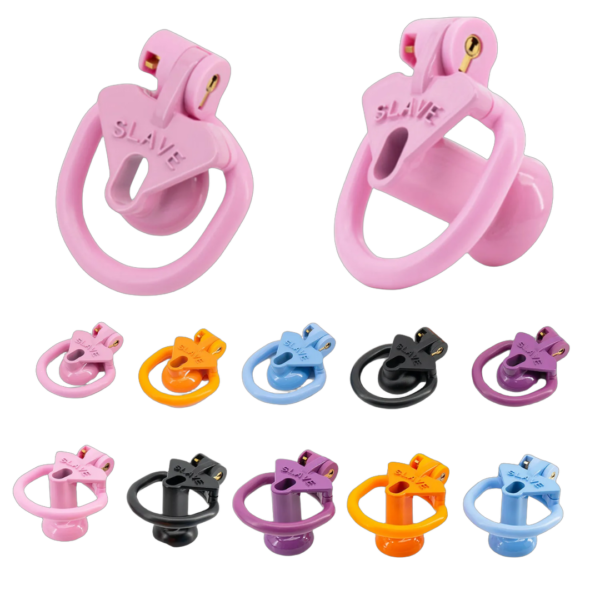
See colors and configurations →
3D Printed Negative Chastity Cage with 4 Rings
The open-grid resin body keeps airflow and cleaning simple, and the four included rings mean you can adjust fit without buying spares. Black, White, and Pink finishes round it out. A straightforward example of what a well-documented listing looks like — dimensions, rings, colors, and construction all stated.
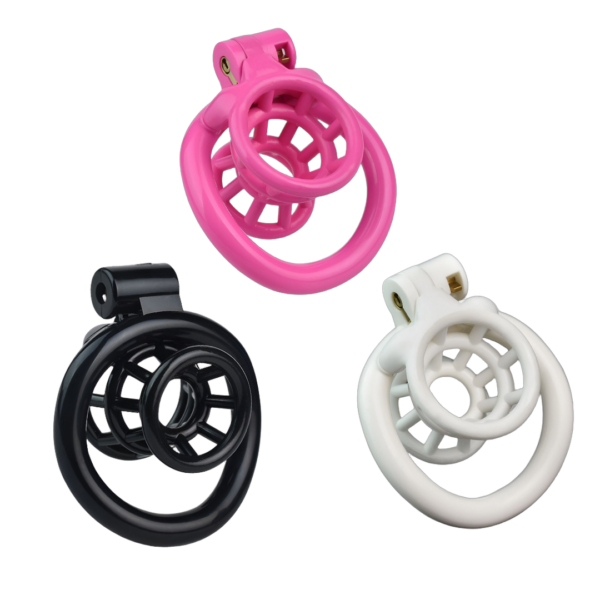
View the 3D Printed Negative Cage →
New to the design itself? Start with What Is an Inverted Chastity Cage? then come back here. When your shortlist is ready, the full range is in the Inverted Chastity Cage collection, and the Size Guide will confirm your ring size before you order.