
Choosing between a metal and a resin inverted chastity cage isn’t a question of which material wins. It’s a question of which trade-offs fit what you care about: weight, rigidity, finish, cleaning, and the configurations each product actually offers. Both materials show up across the inverted category, sometimes in near-identical shapes, so the honest comparison happens product by product.
Metal vs. Resin at a Glance
| Metal (typically stainless steel) | Resin (nylon, ABS, natural resin) | |
|---|---|---|
| Weight | Heavier; the weight is part of the feel | Light; often around 100g for printed sets |
| Rigidity | Firm, non-flexing shell | Rigid but slightly less dense in the hand |
| Surface and finish | Polished or matte metal, depending on the product | Layered printed texture or smooth molded finish, depending on the product |
| Ventilation | Depends on cutouts in the design | Depends on the printed or molded pattern |
| Cleaning | Simple wash-and-dry routine; non-porous surface | Same basic routine; dry printed textures fully |
| Profile | Set by the geometry, not the metal | Set by the geometry, not the resin |
| Available designs | Wide range of shells, cylinders, and ring styles | Wide range, strong on colors and printed patterns |
| Price | Varies by product and configuration | Varies by product and configuration |
Metal Inverted Chastity Cages
Steel models tend to be the simplest to evaluate: one rigid body, a ring, a lock, and that’s the whole story. The material gives a smooth, non-porous surface and a weight you notice. When a product specifies a grade — 304 stainless steel, for example — that’s documented information worth using; when it just says “stainless steel,” don’t upgrade the claim yourself.
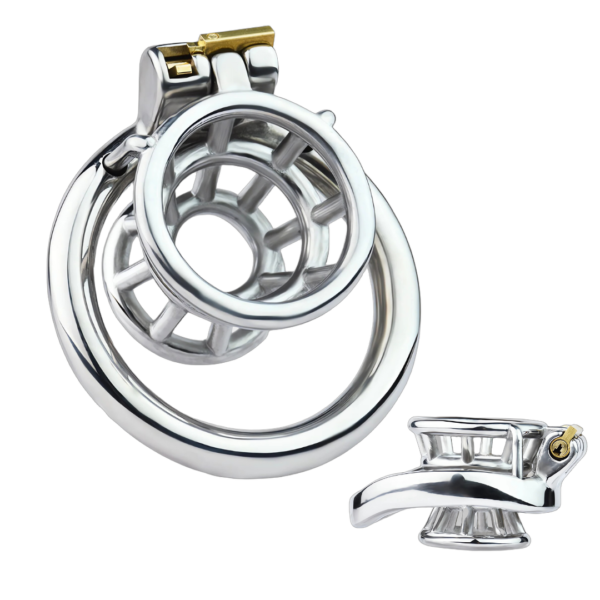
Metal Inverted Chastity Cage Stainless Steel Negative Chastity Device
A stripped-down steel example that makes the material comparison easy: a stainless-steel negative cage with your choice of arc or round base ring, in four sizes from 40 to 55mm. Nothing else in the box to think about — which is exactly why it’s useful here. If you want to isolate what a metal version feels like, without straps or inserts in the way, this is the cleanest comparison point in the shop.
Steel versions also come with belt-supported configurations, where the material choice and the setup choice stack:
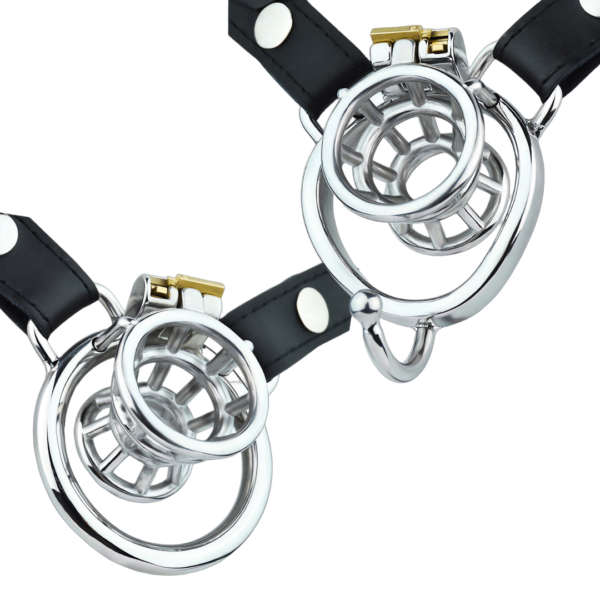
Negative Chastity Cage with Adjustable PU Strap
The steel cage here is the open negative style, and the adjustable PU strap (61–106cm) turns it into a belt-supported setup — a reminder that “metal vs. resin” is rarely the only decision on the page. Ring style is selectable too: round, or curved with a hook. Read the package section and you’ll see the cage, the ring, and two keys included, with the strap as the supporting piece.
Resin Inverted Chastity Cages
Resin is where 3D printed cages live. The practical differences show up in weight — printed sets often land around 100g — and in the range of colors and patterns that printing allows. Listings usually name the resin used (nylon resin, ABS resin, natural resin); that name is your material fact. Resin doesn’t mean flimsy, and it doesn’t mean “medical grade” either — it means the specific polymer stated on the page.
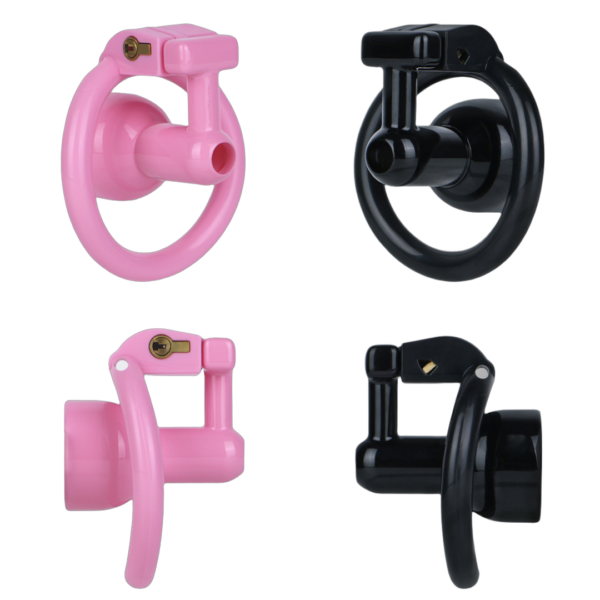
Ultra-Light Hard Resin Inverted Chastity Cage
The name states its case, and the product page backs it: a compact body-safe natural resin body in Black or Pink, built as the low-weight alternative to a metal cage, with an optional matching nylon strap. If weight is your main reason for choosing resin over steel, this is the model that puts that trade-off front and center.
View the Ultra-Light Resin Cage →
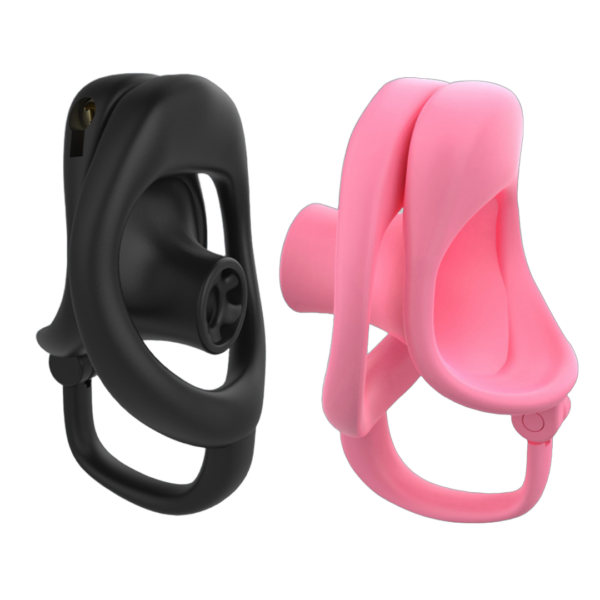
Resin Inverted Chastity Cage – Black / Pink
Worth comparing for its configuration structure: the standard set comes with 41, 46, and 51mm rings, and a larger 57mm ring is a separate option. That’s a real resin example of how one product can offer both a multi-ring set and an optional extra — the kind of detail that matters more over time than any material stereotype.
Weight and Everyday Wear
Weight is the difference you feel first. A steel cage hangs on the ring; a resin set at ~100g barely registers by comparison. Neither sensation is objectively better — some wearers specifically want the heft, others find lighter easier for long sessions. The honest rule: compare the listed weight for the exact configuration you’re buying, because straps, inserts, and extra rings all change it. And if anything you wear comes with persistent pain, numbness, significant swelling, discoloration, or broken skin, stop and resolve the fit before continuing.
Cleaning and Maintenance
General routine for both materials: wash with warm water and mild soap, rinse thoroughly, and dry completely before storage. Metal’s non-porous surface makes drying straightforward. Printed resin can hold moisture in its layer lines, so give textured areas extra drying time. Follow whatever care instructions the product page includes for its specific material and finish — if a product documents a coating or a specific resin, that wording overrides generic advice. Never apply a cleaning method a product doesn’t mention.
Discretion and Profile
Don’t credit the material for the profile — geometry does that. A compact resin shell and a compact steel shell of the same listed dimensions project the same amount. What material does affect: how the surface sits against clothing (a polished steel shell and a textured resin shell behave differently under tight fabric) and how much the assembly weighs. If discretion is the goal, compare the profile measurements first and the material second.
Which Material Should You Choose?
A decision framework instead of a winner:
- Choose metal if: you want maximum rigidity, a smooth non-porous surface, and you don’t mind (or actively want) the weight.
- Choose resin if: weight is the first thing you notice, you want color options, or the printed designs appeal to you.
- Decide by product when: two models offer different ring configurations, strap options, or package contents — those differences can outweigh the material question entirely.
For the broader buying picture, the choosing checklist covers all seven checks, and the beginner’s guide explains the inverted design itself.
FAQ
Is a metal inverted cage safer than resin?
Neither material is automatically safer. Fit, hygiene, and how you use the device matter more than the material. Use only what’s documented on the product page, and stop if you experience persistent pain, numbness, or any unusual symptoms.
Do resin cages break easily?
Printed resin sets are rigid and built for their purpose, but like any material they have limits. Check what the product page documents rather than assuming durability from the material name.
Why do weights differ so much between listings?
Configuration. A listed weight usually covers a specific setup — cage, ring, sometimes a strap — and adding or swapping components changes it. Compare weights only between the configurations you’d actually buy, and confirm your ring size on the Size Guide first.
Compare both sides directly in the Inverted Chastity Cage collection — filter by what each listing documents, not by the material name alone.