
Compare these three resin models by documented construction and configuration, not by a claimed best fit or popularity ranking. Their useful differences are the body description, ring package and optional support. Comparable complete-assembly weights are not established in these descriptions, so no weight winner is named.
Compare the stated materials
The Printed Negative calls the body resin and identifies 3D printing as a process. The Plus / Minus Resin uses the more specific wording “100% nylon resin,” while the Detachable Flat Inverted uses “natural resin.” Those are the names on the three listings, not three equivalent chemical specifications. Neither the color nor a smooth-looking photograph improves a vague material label.
Shape and profile options
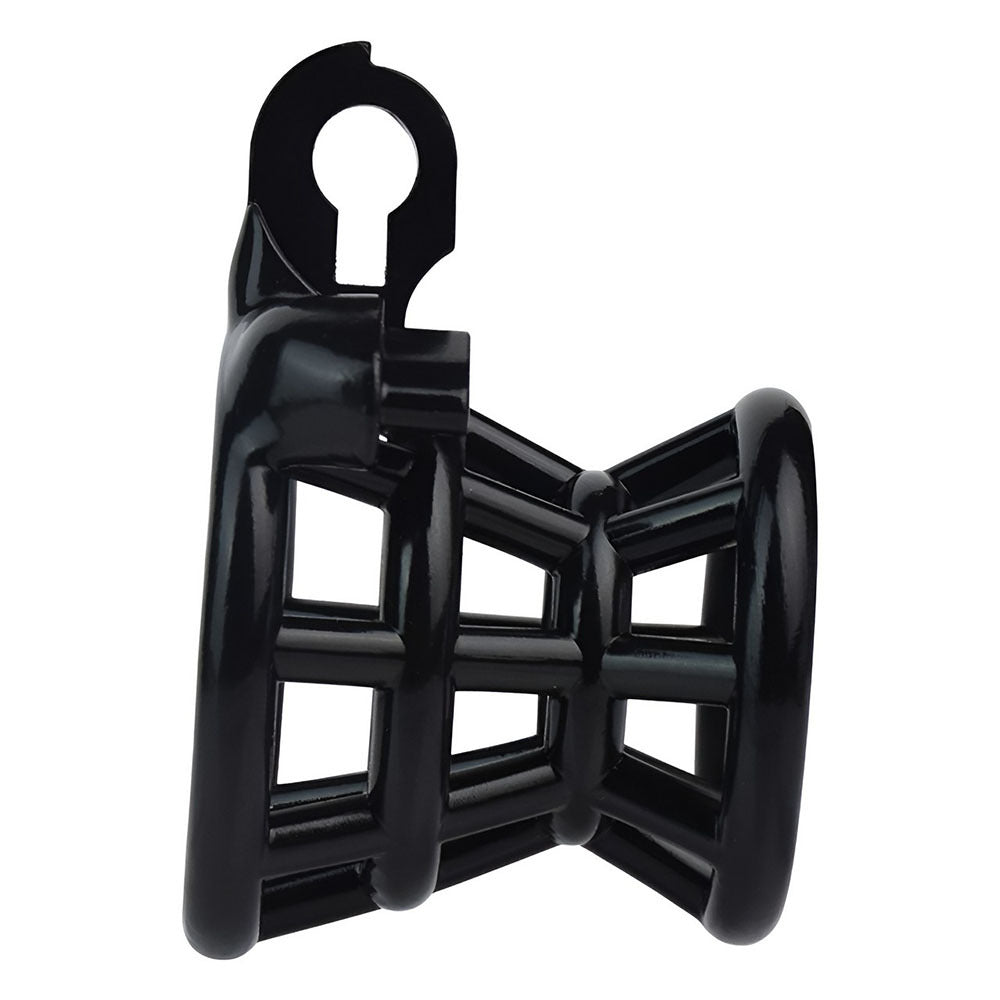
The printed negative’s open grid is visible from the side; the side image narrows through the center. In the Plus / Minus family, choose the profile before comparing parts. The term “set” can be misleading if it suggests both bodies come together. The selector and the two labeled package images show a separate arrangement for each style. The detachable listing is different again: it describes a flat inverted profile and has a strap menu, but the description does not identify the function and supplied status of each removable component.
The gallery offers three different sorts of visual evidence. The grid side view lets you trace open space through the printed cage. The Minus illustration puts a single selected body above three labeled rings; the Plus illustration does the same with four. The detachable listing places a separate shaped component next to the face. Only the first observation is about an opening in the body, only the second is an explicit ring package, and the third is a question about an additional part. If all three notes simply read “resin, several parts,” the most useful distinction between these models disappears.
Included rings and accessories
| Configuration | What the product evidence supports | What is not established |
|---|---|---|
| Printed Negative | Four rings: 42, 45, 48 and 52 mm; lock and two keys. | An equivalent tested weight for every working configuration. |
| Plus / Minus | Minus diagram: 43, 48, 52 mm. Plus diagram adds 38 mm. | The same body or ring package for both styles. |
| Detachable Flat Inverted | Four listed ring sizes; optional strap; lock and keys listed. | A written ring count for every color/strap combination or a component-by-component specification. |


For someone comparing ring sets first, the difference between the printed set and Minus is more informative than their colors. The printed set includes 42, 45, 48 and 52 mm; Minus shows 43, 48 and 52 mm. The overlap at 48 and 52 mm tells you about nominal diameters in two separate packages. It does not mean that the rings connect to the other body. Plus adds a 38 mm ring to its own family’s series. None of these facts depends on an inference about how nylon resin feels relative to a printed resin with unspecified formulation.
What the listings do not establish
- Which model will fit an individual.
- Which is lightest without comparable measured values.
- Which is more durable without relevant testing.
- Whether a finish is integral color or a coating unless documented.
- Whether an opening or grid guarantees easy hygiene.
For weight, the printed model lists approximately 85 g and the nylon-resin model about 100 g, but the descriptions do not establish equivalent assemblies on the scale. For finish, the Plus / Minus page describes its own finish as hand-polished and unpainted. That claim does not describe the printed grid or establish that every edge of a delivered part will be free of defects.
Build a resin shortlist
Use the resin buying guide for material and process questions, package contents for included parts and resin care before deciding whether the documented maintenance is practical. These are three configurations to investigate, not tested recommendations. Apply the same fields when browsing the inverted cage collection.
A reader looking for an unpainted finish has a statement on the nylon-resin listing to check; the other two pages do not become unpainted by comparison. That detail is independent of whether a ring set is supplied.
If you want an explicit ring package, the printed set and the style-labeled Plus / Minus drawings are informative for different reasons. If a detachable component is central to your decision, get its name, the configuration that includes it and the manufacturer’s instructions first. In that case the broad word “resin” is one of the least decisive fields.
A practical decision follows from the kind of evidence you need. If it is a known package and a grid shape, start with the printed model’s body drawing and itemized line. If it is a choice between a positive and a negative profile, start with the labeled Plus and Minus photographs and decide which one belongs in the comparison before counting rings. If it is a no-strap choice on a low front, the detachable model’s selector answers that narrow question. Stop there if the remaining decision depends on the unidentified component. A shorter shortlist with one open issue is easier to act on than three apparently complete rows built from guesses.