
Measure cage depth only after defining where the measurement starts and ends. For internal depth, both endpoints must describe the relevant inner space—not an outside shell, lock housing or an unspecified mounting plane. This guide concerns an off-body device or its drawing, not inserting a measuring tool into the body.
Start with the reference points

The diagram is illustrative and contains no product-specific fit recommendation. An arrow between exterior surfaces measures an exterior dimension even if the page calls it “depth.” If the reference plane is unclear, the number remains unsuitable for an internal-space comparison.
A repeatable recording sequence
- Identify the exact model and selected body configuration.
- Find the original chart and read the arrow endpoints and units.
- Write down the stated reference plane and inner limit. If either is undefined, ask for clarification.
- If checking a device you own, keep it off the body and use an appropriate non-damaging measuring method only where the inner surfaces are accessible. Do not force tools into a recess.
- Repeat the reading and record any uncertainty. Do not infer hidden space by subtracting a guessed wall thickness.
Separate the entries in your notes
| Entry | What belongs there |
|---|---|
| Internal depth | A value with a defined inner starting plane and inner limit. |
| Exterior side dimension | The outside value and the components included by its arrow. |
| Configuration | The body style, selected components and relevant model version. |
| Uncertainty | An unclear endpoint, inaccessible surface or stated tolerance. |
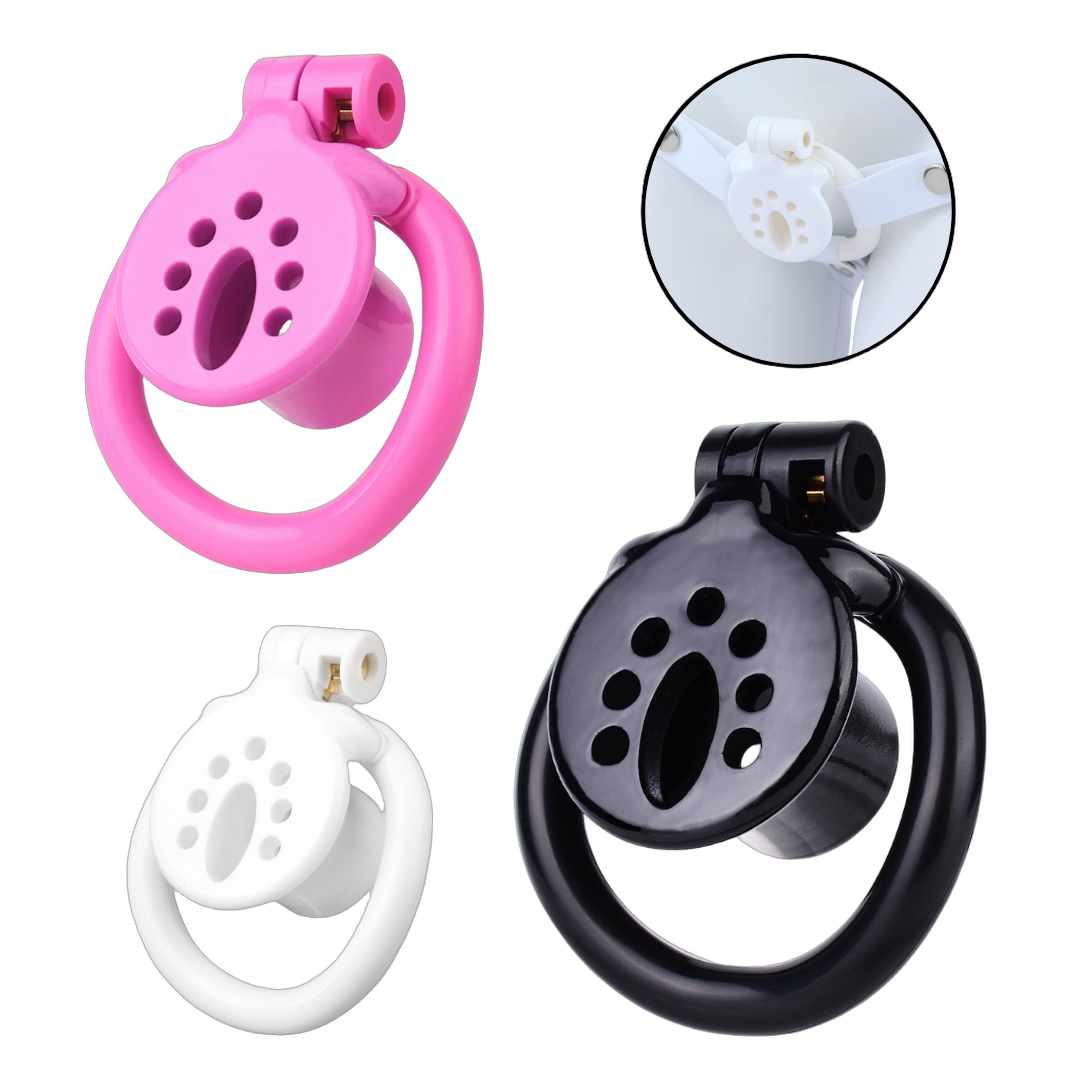
Flat Inverted Chastity Cage with 4 Base Rings and Adjustable Strap
The four-ring Flat Inverted model has a gallery dimension of 35 mm on its side view. That annotation should not automatically be called internal usable depth. It is a practical example of why the arrow endpoints must be confirmed before a number enters an internal-space comparison.
When two specifications use different definitions
Ask for the same defined dimension on each product. If one reports an outside span and the other an inside distance, do not convert by assumption or compare the numbers as if they were equivalent. Different ring options or removable components may also change the selected assembly.
A stated measurement tolerance belongs only to the value and product for which it is documented. It is not permission to ignore a discrepancy or a margin that proves a fit acceptable.
Keep measurement separate from suitability
More depth is not automatically more comfortable, and less depth is not automatically more discreet. The conceptual depth-versus-length guide explains the distinction; the broader measurement record and the size chart guide help organize the other fields. None supplies a personal fit guarantee.