
“Coated” describes a surface treatment; “stainless steel” describes a base material. Both can apply to one cage. The useful comparison is between documented surface finishes on known materials—not between two categories that are assumed to exclude each other.
Keep material and finish in separate columns
| Base material | Surface information | What you can conclude |
|---|---|---|
| Stainless steel specified | A coating or finish is explicitly specified | Read both claims; the coating may have its own care requirements. |
| Stainless steel specified | No coating information given | The base is described, but absence of a coating claim does not prove bare steel. |
| Metal unspecified | Gold-colored or silver-colored finish | Color does not identify the underlying alloy or treatment. |
| Metal unspecified | No finish information | Both fields remain uncertain; do not infer them from a photograph. |
Gold-colored does not mean solid gold, and a silver appearance does not establish a stainless grade. A listing that names a finish without identifying plating, paint or another process has not supplied that missing detail.
Read two actual listings
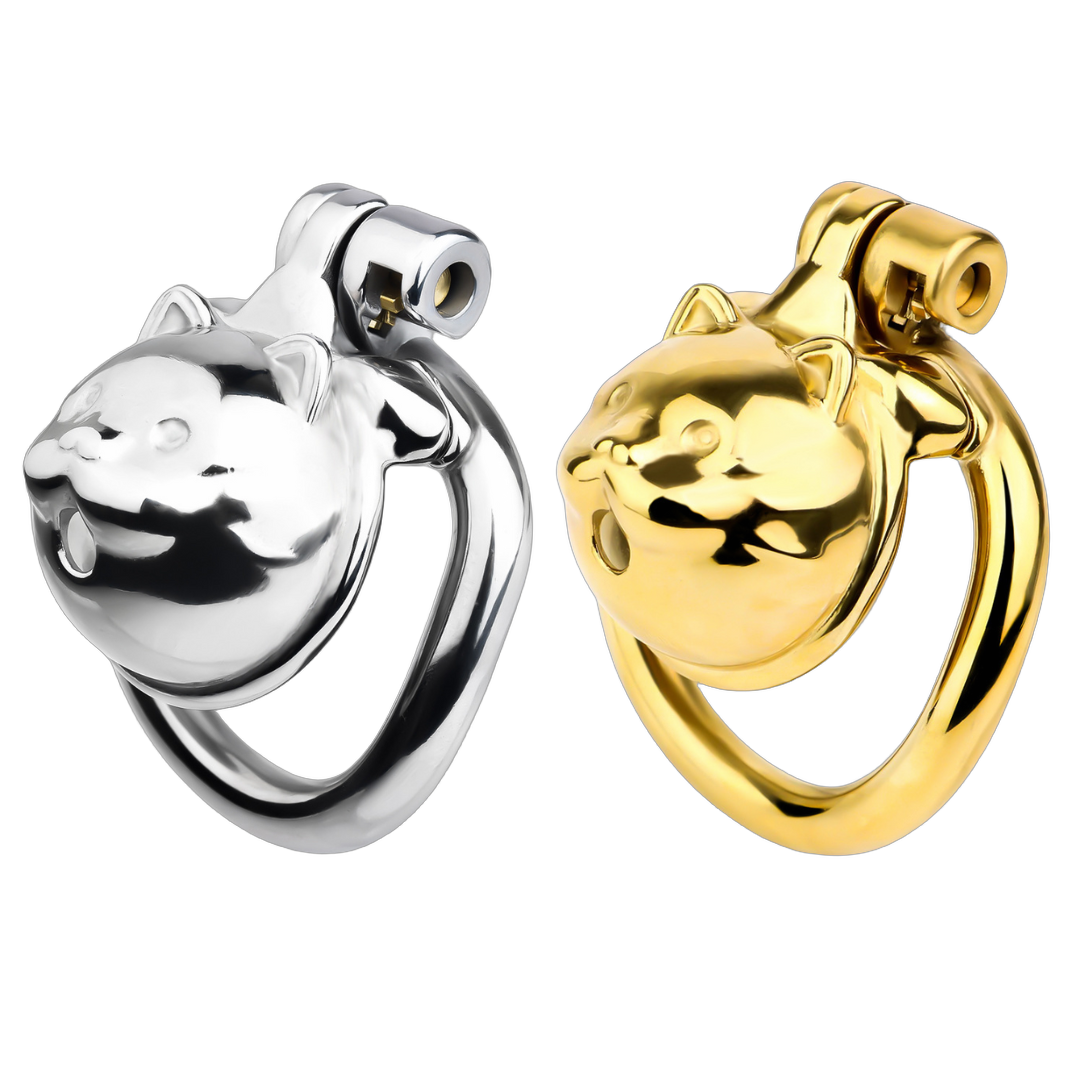
Lucky Cat Stainless Steel Chastity Cage – Silver / Gold
The Lucky Cat listing names stainless-steel construction and offers Silver or Gold finishes. That shows how a base-material claim and a finish choice can coexist. The current description does not identify the finishing chemistry, so this guide does not call either version a verified coating type.
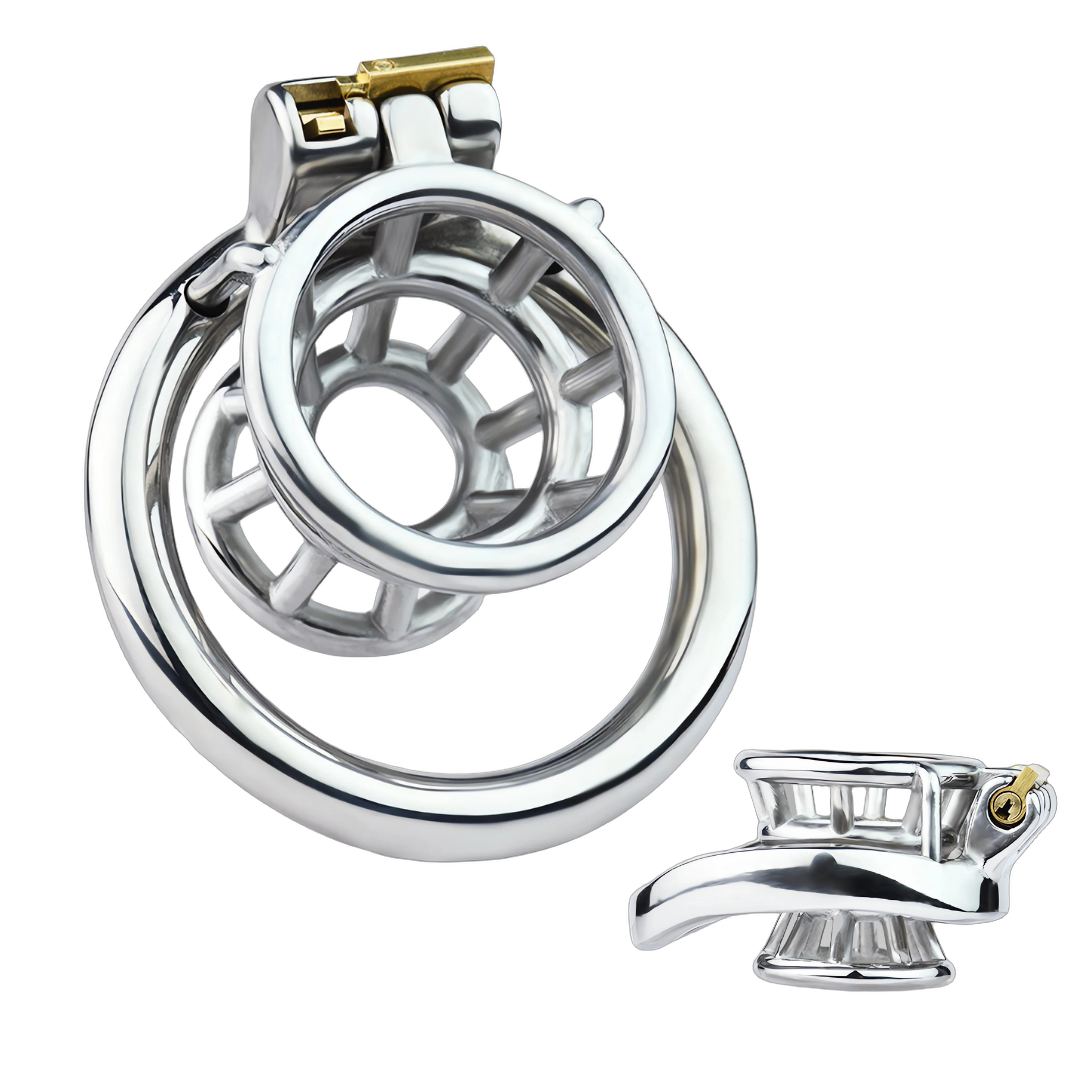
Metal Inverted Chastity Cage Stainless Steel Negative Chastity Device
This listing specifies stainless steel and arc or round ring choices, with no color-finish menu. It is a useful comparison of documented fields. The absence of a finish option is not enough to certify an uncoated surface or guarantee that a scratch is harmless.
Care follows the exact surface
- Use product-specific cleaning instructions and avoid assuming that an unknown finish tolerates solvents, abrasives or heat.
- Inspect chipped, peeling, pitted or rough areas off the body. Do not dismiss damage as cosmetic when its depth or effect is uncertain.
- Do not sand or polish through a finish to restore appearance. That can change the surface and expose an unspecified material.
- Keep parts from rubbing against hard objects in storage, and inspect connections as well as broad surfaces.
Stainless steel is not a promise that damage, contamination or corrosion can be ignored. A scratch may create a rough contact area even where no separate coating is present. Stop using damaged or questionable parts and ask the seller about the supported repair or replacement route.
Questions worth asking
Ask which material is used in each skin-contact part, what finish is applied, and which cleaning methods are approved for that finish. If the answer is unavailable, leave the field unknown rather than selecting on a presumed safety advantage.
For the next checks, see colored and coated surface care, the stainless-steel buying checklist and hardware inspection. Ring geometry and fit remain separate questions from color or finish.