
For circular inner openings, 40, 45 and 50 mm differ by 5 mm of diameter at each step. That corresponds to approximately 15.7 mm of inner circumference per step. The numerical difference is clear; how any ring would fit an individual is not determined by this table.
Compare the same circular dimension
| Inner diameter | Calculated inner circumference | Change from previous row |
|---|---|---|
| 40 mm | 125.7 mm | — |
| 45 mm | 141.4 mm | 5 mm diameter; 15.7 mm circumference |
| 50 mm | 157.1 mm | 5 mm diameter; 15.7 mm circumference |
The circumference values use C = πD and are rounded to one decimal place. They apply to an ideal circular inner boundary, not an oval, curved profile or soft body measurement. A 45 mm value is not a safe default merely because it is the middle row.
One model offering these sizes
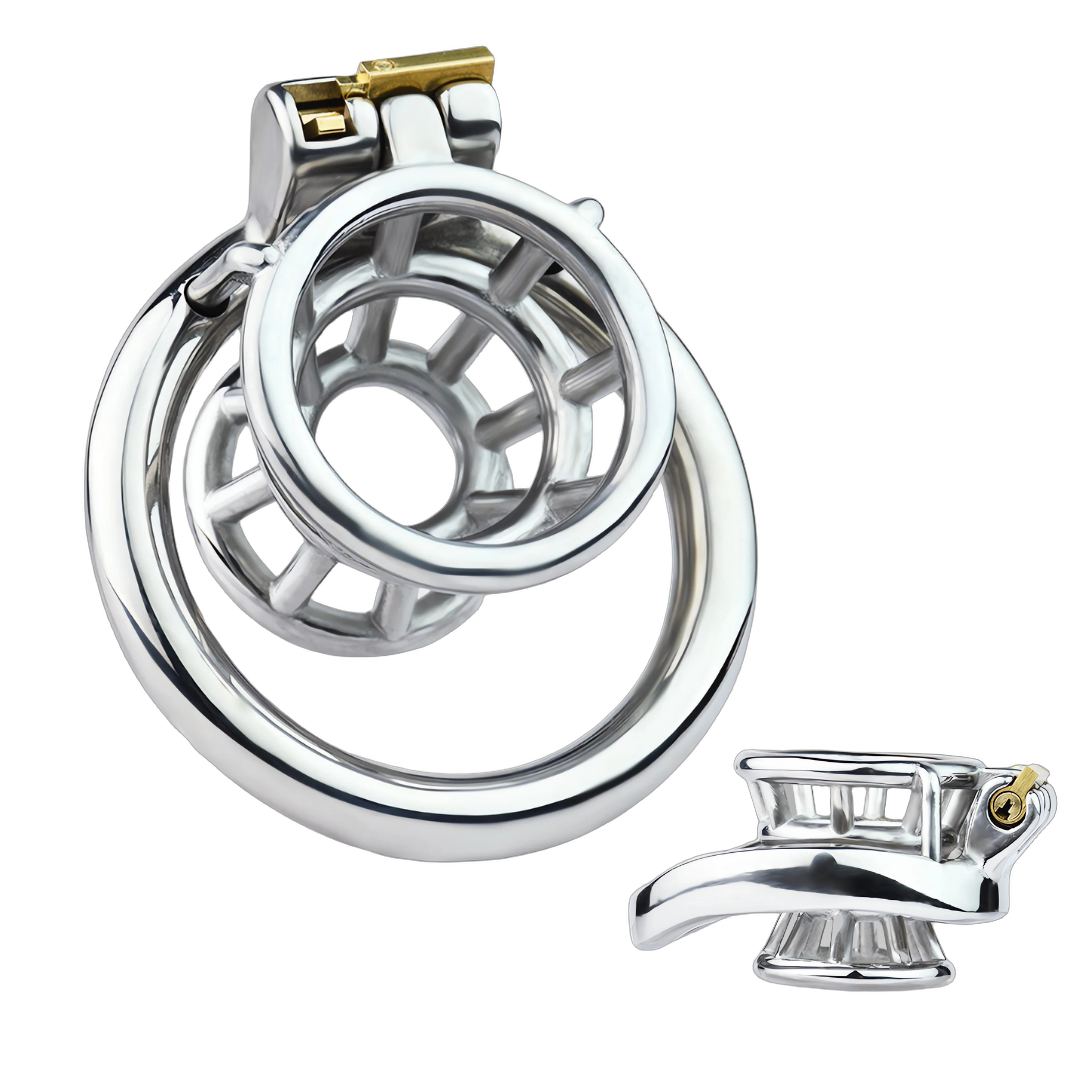
Metal Inverted Chastity Cage Stainless Steel Negative Chastity Device
This stainless-steel negative cage offers 40, 45, 50 and 55 mm sizes, with separate arc or round ring styles. It lets you see the three values within one model’s selector. Keep the shape choice in the comparison; equal nominal numbers do not erase differences in profile.
Check the label before using the table
- Confirm that the product value is an inner measurement rather than an outside span.
- Confirm which ring shape the number describes.
- Keep the same model and supported connection in view.
- Do not infer that all size choices are included in the box.
For the calculation itself, see inner diameter versus circumference. For the shape distinction, read round versus oval rings. These are separate questions from which configuration is supplied.
What the numbers do not say
They do not assign a ring to a body type, predict comfort or establish that someone should round down for security. Pressure can coexist with movement elsewhere in an assembly. Do not continue through symptoms to test a numerical theory.
Record your measurement method and compare defined dimensions using the ring-size guide. If the comparison falls between options, use the between-sizes checks. Ask about an unclear dimension instead of treating any of these three sizes as a universal starting point.