
“Detachable” needs a named part. A cylinder, cap, support strap or insert can have a different removal purpose and assembly method. “Fixed” is equally specific: a body section may be fixed while its ring or closure still separates for normal operation.
What changes for maintenance
| Question | Documented detachable part | Part not intended to separate |
|---|---|---|
| Cleaning access | Remove only as instructed, then follow care for each component. | Clean accessible surfaces using the approved method; do not force a joint. |
| Inspection | Check the mating surfaces, alignment and required fasteners. | Check edges, joints and closures too; fixed does not mean maintenance-free. |
| Reassembly | Use the exact matching parts and normal assembly method. | Do not create a new opening or removal method. |
| Replacement | Obtain a supported model-specific match. | Ask whether the component is serviceable rather than assuming it is replaceable. |

Flat&Inverted Chastity Cage With Detachable Metal Cylinder
The Flat & Inverted model explicitly identifies a detachable metal cylinder and describes supported flat and inverted configurations. It provides a clear noun and purpose for removal. It does not establish universal cylinder compatibility, a tightening value or a permission to modify the interface.
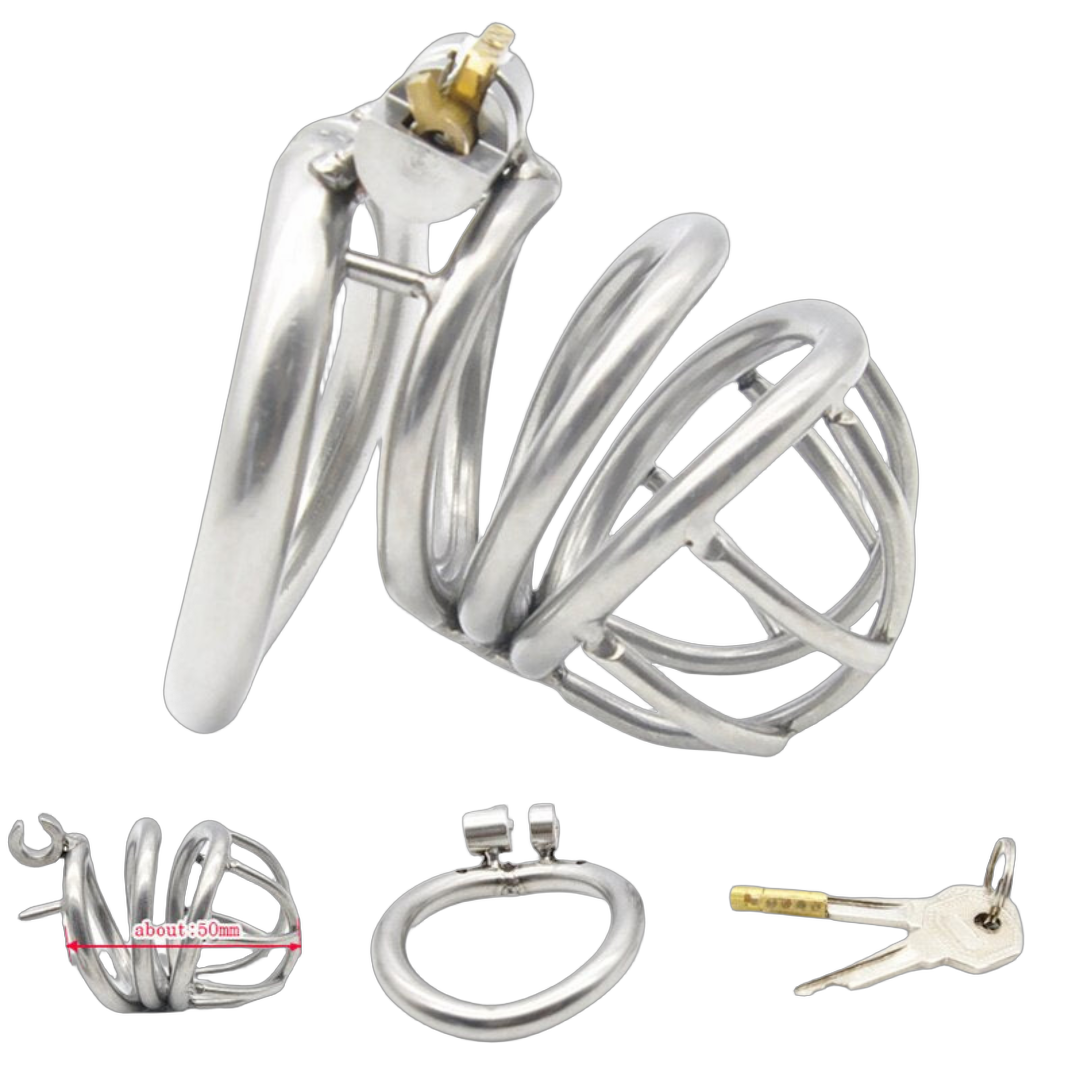
Metal Chastity Cage with Invisible Lock Key – Stainless Steel
The Invisible Lock model describes an integrated keyed design rather than a cylinder-based conversion of the cage body. Use it as a contrast in documented construction, not proof that every part is permanently fixed. Its normal closure and ring arrangement still need the model’s inspection and release checks.
An off-body assembly checklist
- Identify which part the instructions actually permit you to remove.
- Keep the model’s components together and inspect them for damage or contamination.
- Clean and dry according to the instructions for each material.
- Reassemble without force, improvised fasteners or guessed tightening values.
- Verify normal operation off the body; stop if alignment or release is abnormal.
A detachable part can expose surfaces for care, but it can also introduce small pieces and interfaces to track. A fixed structure may have fewer intended disassembly steps, but still has contact surfaces and hardware that need checking. Neither is automatically easier or more suitable.
Use the parts overview to identify components, compatibility checks before replacement and hardware inspection for signs that use should stop. The short detachable explanation covers the wording without this maintenance detail.